By MELB NOTE Editorial Team · Reviewed 10 August 2026 · No sponsorship or affiliate links
The short answer
Matcha is a powdered tea, made by mixing it into water — reach for it when that is the preparation you are after. Hojicha names a roasted Japanese green-tea category instead, so check the particular product for its form and instructions before you buy.
In an Uji production example from Japan’s Ministry of Agriculture, Forestry and Fisheries, matcha comes from grinding tencha, while hojicha comes from roasting sencha or kawayanagi. That production difference does not make either one the healthier, more caffeinated or better choice.
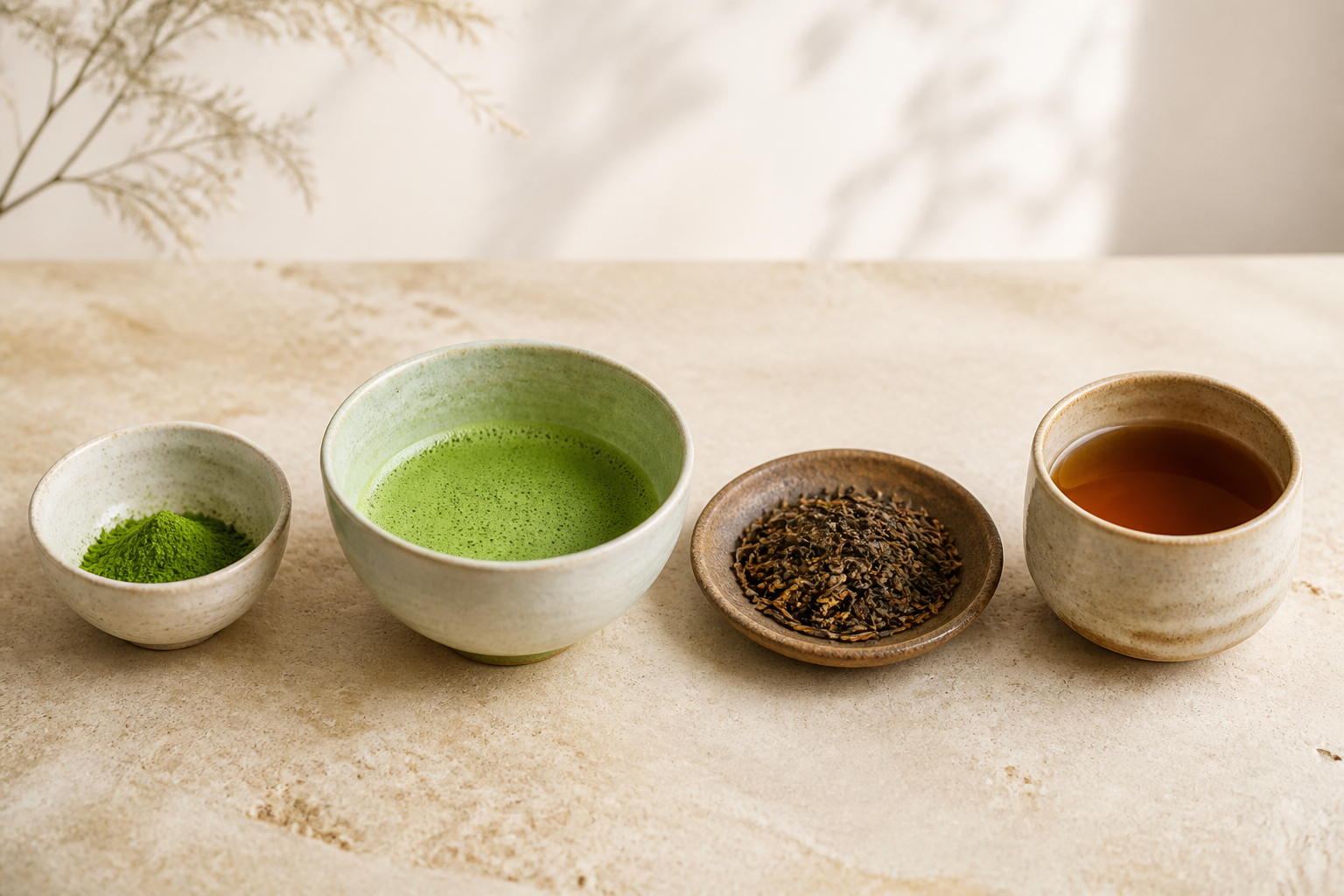
Matcha is a powdered preparation made by grinding tencha in the MAFF Uji example.
Hojicha is a roasted-tea category in that same example, made by roasting sencha or kawayanagi.
Read the packet next. Hojicha may be sold in different retail forms, so one product’s preparation is not a rule for all of them.
On this page
The production difference is the useful starting point
Japan’s Ministry of Agriculture, Forestry and Fisheries describes tencha as steamed and dried without rolling, then ground into a fine powder to make matcha, while hojicha is tea made by roasting sencha or kawayanagi.
These definitions are more useful than any comparison based on colour or trend. Even so, they will not tell you how a particular brand tastes, how much caffeine ends up in your cup, or whether one is somehow “better” than the other.
Matcha and hojicha at a glance
| Question | Matcha | Hojicha |
|---|---|---|
| Production description in the MAFF Uji example | Tencha ground into fine powder | Sencha or kawayanagi roasted |
| Basic preparation distinction | Powder is mixed into water | Check the named product’s form and instruction |
| Useful beginner question | Do I want to mix a tea powder? | Do I want to try a roasted-tea category, then follow its packet? |
| What the label does not settle alone | Caffeine, health, quality and universal flavour | Caffeine, health, quality and universal flavour |
Specific products can vary in form and instruction. Do not force the same water amount, temperature or method onto every tea with either name.
How to choose without forcing a winner
- Reach for matcha when mixing a fine tea powder into water is the experience you want.
- Reach for hojicha when you want to explore the roasted-tea category, but do not assume every product arrives in the same form — check what is in front of you.
- Let the named product decide when the real question is simply how to prepare today’s cup.
Practical takeaway: Start from the preparation you are after, then let the specific packet in front of you — not a general comparison — decide the amount, the water and the time.
Go deeper: production type and retail form are different questions
Why does the form matter?
Matcha’s powder form is central to its preparation. Hojicha’s production name does not itself decide how every retailer packages it.
One named Osulloc hojicha product, for example, is a teabag product. That example is a reminder to read the packet, not evidence that all hojicha is bagged.
Frequently asked questions
Is hojicha the same thing as roasted matcha?
No. In the MAFF Uji example, matcha and hojicha are described through different production paths: ground tencha for matcha and roasted sencha or kawayanagi for hojicha.
Does hojicha always have less caffeine than matcha?
This guide does not set a fixed caffeine ranking. Product, serving size and preparation can vary, so use the information supplied for the item you are actually making when caffeine matters.
Can both be used in a latte?
Some products may be sold or prepared for milk drinks, but that is product-specific. This article does not provide a universal latte method or ratio.
Sources and scope
- Japan Ministry of Agriculture, Forestry and Fisheries — Uji Tea
- Japan Ministry of Agriculture, Forestry and Fisheries — Japanese green-tea preparation guide
- Osulloc — Jeju hojicha
Scope: MAFF supports a regional production and preparation distinction. The Osulloc page is a named retail-form example. None of these sources establishes a health effect, universal caffeine comparison, fixed flavour result or best choice. Reviewed 10 August 2026.


