On this page
Reviewed 29 July 2026 · Beginner guide · No sponsorship or affiliate links.
The short answer
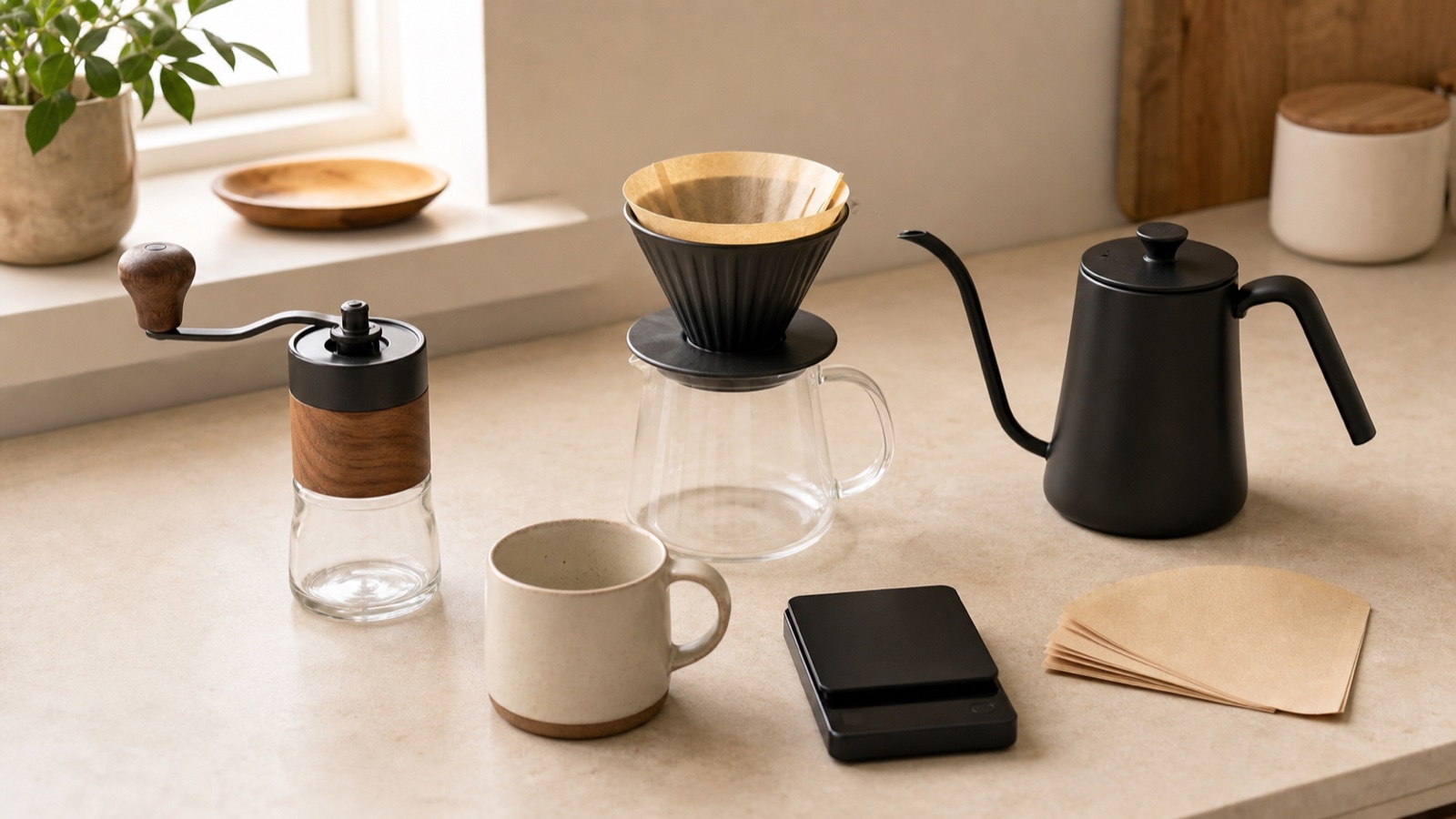
You do not need a full coffee station to begin brewing at home. Start with one simple brewer, the correct filter or accessory, coffee, water and a way to heat and pour it. Add a scale when you want repeatable results, then consider a good grinder after home brewing becomes a regular habit.
In 30 seconds
- Choose one brewing method instead of buying several brewers at once.
- A basic kitchen scale is often the first useful upgrade because it makes your coffee and water amounts repeatable.
- Buy new equipment only when it solves a problem you have actually noticed.
What you need for the first cup
- One brewer: a pour-over dripper, French press or another method you understand and expect to use.
- The matching consumables: for example, the correct paper filter for your dripper.
- A way to heat and pour water: an ordinary kettle can be enough at the beginning.
- Coffee prepared for that brewer: a local roaster or café can grind a small bag for your chosen method.
Your phone can provide a timer. A mug can catch the coffee if it fits safely under the brewer. These simple substitutions let you learn whether you enjoy the routine before spending more.
The first upgrade: a scale
A scale helps you repeat the amount of coffee and water. It also makes troubleshooting easier: if the next cup tastes different, you know whether the recipe stayed the same.
A specialist coffee scale is not required. A kitchen scale that measures in 1-gram steps and has a tare function can get you started. A 0.1-gram display is convenient for smaller coffee doses, but it is not a condition for making a good first cup.
When a grinder becomes worthwhile
Grinding just before brewing can help preserve aroma and lets you adjust grind size. However, an inconsistent grinder can make flavour adjustments difficult. If you are still deciding whether home brewing suits you, buying small amounts ground for your brewer is a reasonable temporary approach.
Consider a burr grinder when you brew frequently, want to compare different beans or need to correct sour, bitter, fast or slow brews through grind changes.
Useful later, but not essential on day one
- A gooseneck kettle for a slower, more controlled pour
- A thermometer
- A dedicated coffee server
- Several different drippers
- A higher-priced electric grinder
These tools can improve convenience and consistency. They do not replace suitable coffee, sensible proportions or practice.
Go deeper: a simple buying order
A useful order for many beginners is: one brewer and its filters, then a scale, then a grinder. A gooseneck kettle can come later if pour control is genuinely limiting your results. This is a practical sequence, not a universal rule; a French press user, for example, may gain little from a gooseneck kettle.
Ask these three questions before buying
- How many times a week will I use it?
- Will cleaning and storage make the routine harder?
- What specific problem will this item solve?
If the third answer is unclear, wait. The best beginner setup is usually the smallest one you will use consistently.
What to do today
- Choose the single brewing method you are most likely to use.
- Check what you already own: kettle, mug and phone timer.
- Brew for a week. If repeating the result is difficult, consider a scale; if adjusting freshness or flow is difficult, consider a grinder.
Frequently asked questions
Do I need a scale?
Not to make the first cup. It becomes very helpful when you want to repeat a good result or find the cause of a disappointing one.
Should I buy a grinder or a gooseneck kettle first?
If you brew often and want fresher aroma plus grind control, a good grinder usually changes more. If a shop grinds small amounts for you, you can practise with your current kettle before deciding.
Does expensive equipment automatically make better coffee?
No. Better equipment can improve control and convenience, but coffee, water, ratio, grind and technique still have to work together.
Sources and scope
- National Coffee Association — Pour-Over Coffee
- Perfect Daily Grind — Everything You Need to Know to Brew Great Pour Over Coffee
This guide is a low-cost starting framework, not a product ranking. Equipment needs vary by brewing method. Reviewed 29 July 2026.


