On this page
Reviewed 29 July 2026 · Beginner guide · No sponsorship or affiliate links.
The short answer
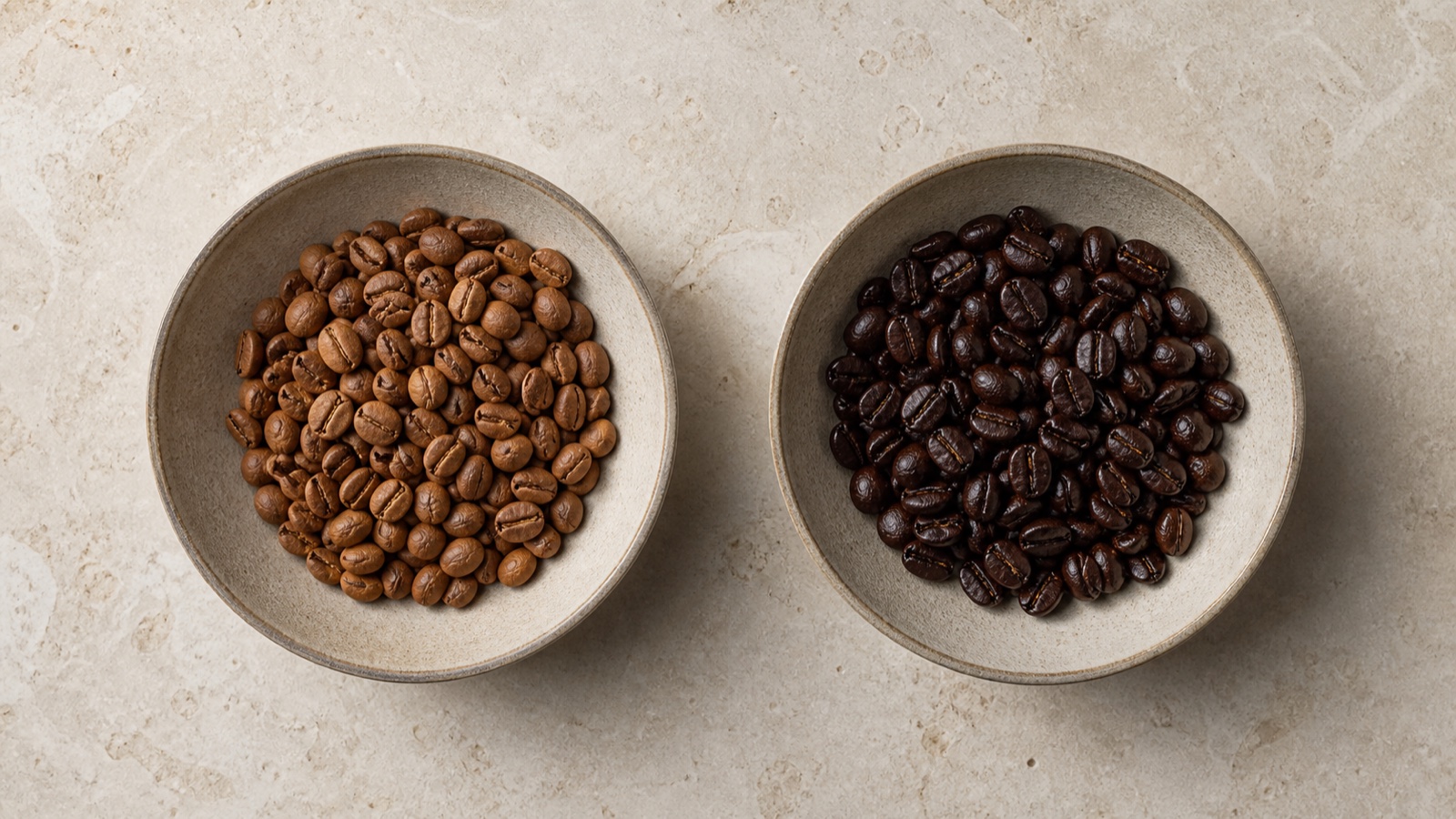
Light-roast coffee often keeps more of the bean’s bright, fruit-like or floral character. Dark-roast coffee usually brings roast-driven flavours such as cocoa, toasted nuts, smoke and more obvious bitterness. Neither is automatically better, stronger or more premium: they are different styles, and the best starting point is the one that matches the flavours you enjoy.
In 30 seconds
- Choose a lighter roast if you want clearer acidity and more origin character.
- Choose a darker roast if you prefer toasted flavours, bitterness or a coffee that stays noticeable with milk.
- Read the tasting notes as well as the roast name, because “light”, “medium” and “dark” are not identical across roasters.
What does roast level change?
Roasting turns green coffee into the aromatic brown beans we brew. As the roast progresses, heat changes the bean’s colour, aroma and flavour compounds. A lighter roast tends to leave more room for characteristics associated with the coffee’s origin and processing. A darker roast tends to make the flavours created during roasting more prominent.
These are broad tendencies, not guarantees. The bean variety, origin, processing, freshness and brewing method still matter. A well-brewed light roast does not have to taste sharply sour, and a dark roast does not have to taste burnt.
What light-roast coffee often tastes like
Light roasts are a useful place to start if you enjoy fruit, flowers, tea-like aromas or a bright finish. Their acidity can feel lively and clear. Because less roast flavour covers the bean’s other characteristics, differences between coffees may be easier to notice.
If your light roast tastes thin or unpleasantly sour, the roast level may not be the only cause. Too coarse a grind, too little contact time or an unsuitable recipe can also produce an under-extracted cup.
What dark-roast coffee often tastes like
Dark roasts commonly emphasise chocolate, toasted nuts, caramelised flavours, smoke and bitterness. Many people find these flavours familiar and easy to recognise, especially in milk drinks.
Dark colour does not tell you the finished drink’s strength. Brew strength depends heavily on how much coffee and water you use. Specialty Coffee Association research also cautions against treating body as something that simply rises with every darker roast level, so colour alone is not a reliable measure of heaviness.
A simple choice guide
- You like fruit, tea or floral aromas: begin with a light or light-medium roast.
- You like cocoa, nuts or a bittersweet finish: begin with a medium-dark or dark roast.
- You are curious about bright coffee but worried about sourness: try a medium roast with notes such as caramel, stone fruit or milk chocolate.
- You usually add milk: a medium-dark roast may remain easier to taste, although lighter coffees can also work well.
Go deeper: is medium roast the safe middle?
“Medium” covers a wide range. One roaster’s medium may be close to another roaster’s light or dark. Treat it as a direction rather than a universal measurement. The bag’s flavour description and the roaster’s brewing advice are often more useful than the label alone.
Try both without turning it into a test
- Buy a small amount of one lighter and one darker coffee.
- Brew both with the same method and a similar coffee-to-water ratio.
- Write down two things: which aromas you noticed and which cup you would choose again.
You do not need expert tasting vocabulary. Words such as bright, nutty, bitter, smooth or smoky are enough to identify your preference.
Frequently asked questions
Is dark-roast coffee stronger?
It can taste stronger because roast flavours and bitterness are more obvious. The actual concentration of the drink, however, depends on the brewing ratio and method.
Is light-roast coffee difficult for beginners?
No. If you already enjoy bright tea, citrus or fruit flavours, a lighter coffee may feel very approachable.
Does dark roast always contain more caffeine?
No. Roast colour and bitterness alone cannot predict the caffeine in your cup. Bean type, how the coffee is measured and the brewing recipe all affect the result.
Sources and scope
This guide describes common sensory tendencies, not fixed rules for every coffee or roaster. Reviewed 29 July 2026.


