Reviewed 29 July 2026 · Beginner guide · No sponsorship or affiliate links.
On this page
The short answer
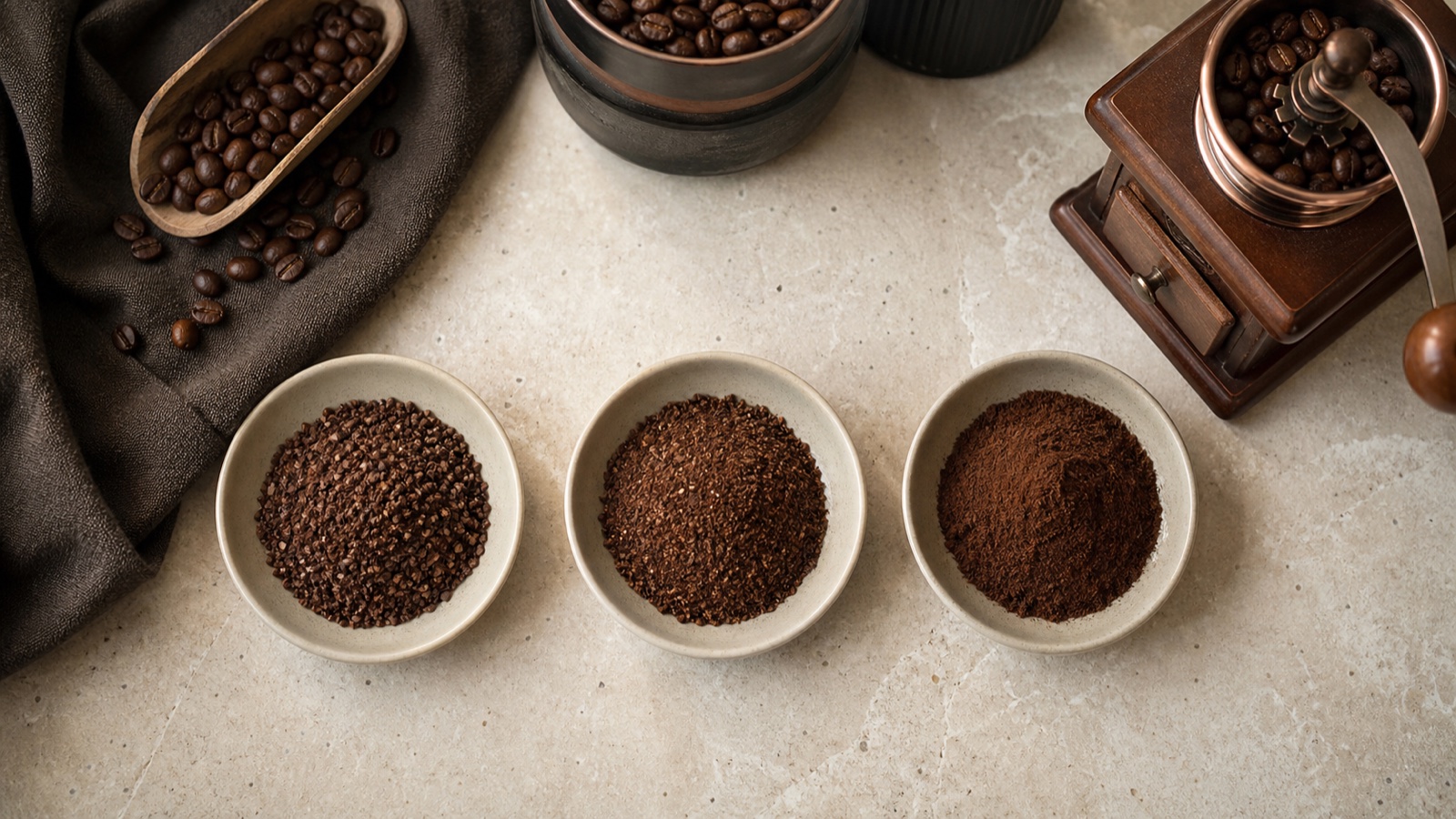
For drip coffee, a finer grind usually slows the flow and makes it easier to extract more from the coffee, while a coarser grind usually does the opposite. If your cup tastes weak and sharply sour, try slightly finer; if it tastes bitter, dry or harsh, try slightly coarser — and change only one small step at a time.
In 30 seconds
- Finer tends to increase extraction; coarser tends to decrease it.
- Keep the coffee dose, water and pouring method the same while testing a grind change.
- Grinder numbers are not universal, so learn the useful range on your own grinder.
Why grind size changes flavour
Smaller coffee particles expose more surface area to water, and in drip brewing they can also create more resistance, so water may pass through the bed more slowly. Both effects tend to increase extraction — the amount of soluble material water takes from the coffee.
Larger particles work the other way: less surface area and often faster flow, which tends to reduce extraction. The result still depends on the brewer, filter, coffee, water, dose and pouring pattern, so treat grind size as a strong adjustment rather than a magic setting.
What happens when the grind is too fine?
A suitable fine setting can bring out sweetness and a fuller flavour, but too fine may make the brew drain very slowly and taste bitter, drying or harsh. Very fine particles can also contribute to uneven flow, so “finer” is not always the solution to a difficult cup.
What happens when the grind is too coarse?
A suitable coarse setting can produce a clean, balanced cup, but too coarse may let water pass too quickly, leaving the coffee weak, hollow or sharply sour because not enough flavour has been extracted.
The simplest adjustment guide
- Weak and sharply sour: move slightly finer.
- Bitter, dry or harsh: move slightly coarser.
- Light but otherwise pleasant: test a slightly finer grind before adding more coffee.
- Overly strong: also check your coffee-to-water ratio.
Move one click or one small marked step, then brew again without changing the dose, water amount or pouring pattern — large jumps make it difficult to learn what helped.
Go deeper: why a cup can taste both sour and bitter
Mixed unpleasant flavours can point to uneven extraction rather than one simple direction. Before making a large grind change, check whether the brew drained irregularly, the coffee bed was disturbed unevenly or the grinder produced many very fine and very coarse particles. Compare small changes and keep notes.
Start points vary by brewer
Espresso generally starts very fine, pour-over in a middle range and French press relatively coarse, but these labels are only broad directions. Filter design, brewer shape and technique all affect flow, so one grinder’s setting “12” may be completely different from another’s.
Keep a one-line record
Write something as simple as “one step coarser — less dry” or “one step finer — sweeter, slower drawdown”, and after two or three brews you will begin to see the useful range for that coffee and brewer.
What to do today
- Record your current setting, coffee dose and water amount.
- Choose one small finer or coarser adjustment based on the flavour.
- Keep every other variable steady and write one sentence about the result.
Frequently asked questions
What if I bought pre-ground coffee?
You cannot change its grind, but you can make small adjustments to ratio, water temperature or contact time. Tell the shop what happened and request a slightly coarser or finer grind next time.
Which direction should I move if the coffee is both sour and bitter?
Do not make a large change based on one taste word. Check for an unusually long or short brew and signs of uneven flow, then compare one small grind adjustment.
Should every pour-over brewer use the same grind?
No. Filter material, brewer shape and pouring method change the flow, so each setup needs its own starting range.
Sources and scope
- National Coffee Association — Pour-Over Coffee
- Specialty Coffee Association — Manipulating and Measuring a Key Attribute in Drip Brew Coffee
- Barista Hustle — The Coffee Compass
The adjustment directions in this guide are broad tendencies for filter coffee. They should not be copied directly to espresso or every brewing system. Reviewed 29 July 2026.


