On this page
By MELB NOTE Editorial Team · Reviewed 2 August 2026 · No sponsorship or affiliate links
The short answer
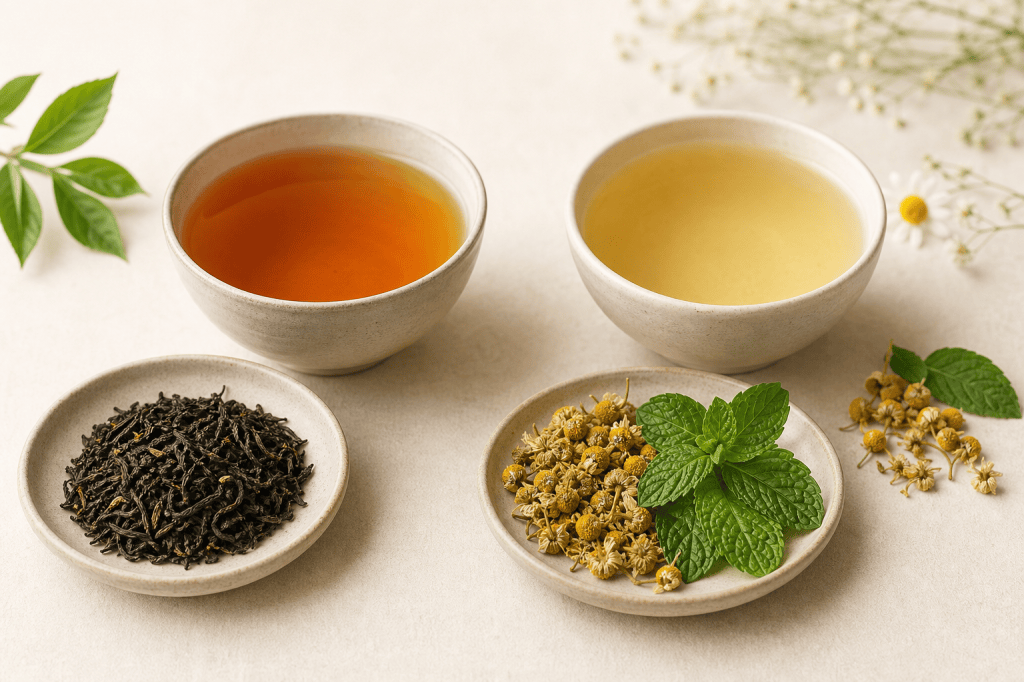
Choose by the ingredients, not just the word “tea” on the front. Green, black, white and oolong tea come from the tea plant. Herbal and fruit infusions can use many other plants, and some blends contain both.
Tea forms such as green and black begin with Camellia sinensis.
Herbal infusions use other plant materials.
Read the ingredients when a blend or caffeine question matters.
What counts as tea in this guide?
The National Center for Complementary and Integrative Health states that green, black, oolong and white tea are produced from Camellia sinensis. That is the botanical meaning of tea used here.
In everyday conversation, “tea” can also describe drinks made from peppermint, chamomile or fruit. Those are more accurately called herbal or fruit infusions when they do not include tea-plant material.
Tea and herbal infusions at a glance
| Question | Tea | Herbal or fruit infusion |
|---|---|---|
| Main plant source | Camellia sinensis | Other leaves, roots, bark, seeds, flowers or fruits |
| Common examples | Green, black, white, oolong | Peppermint, chamomile or fruit blends |
| Can a blend complicate this? | Yes—tea may be blended with herbs or fruit | Yes—some products include actual tea |
| Best first check | Ingredients and product instructions | Ingredients and product instructions |
How to read a packet without making assumptions
- Find the ingredient list. Look for tea-plant material and any other named plants.
- Check whether it is a blend. A fruit or herbal name does not rule tea in or out.
- Use the product’s caffeine information where supplied. Do not apply a blanket rule to every blend.
- Follow the product instructions. Plant material and cut size vary.
Practical takeaway: the front name helps you browse; the ingredients help you decide.
Go deeper: why everyday names overlap
Why call it herbal tea if it is not tea?
“Tea” is convenient everyday language for a warm infusion. The botanical distinction is still useful because it reminds you that different plants and blends can have different ingredients and instructions. It is a label-reading tool, not a reason to police how someone speaks.
Frequently asked questions
Is peppermint tea real tea?
It is commonly called tea, but it is a herbal infusion in the botanical distinction used here because peppermint is not Camellia sinensis.
Can a fruit tea include caffeine?
It can if the blend contains tea. Read the named product’s ingredients and label.
Are herbal infusions safe for everyone?
This article does not make medical or allergy decisions. Check ingredients and seek qualified guidance for pregnancy, medicines, allergies or a medical condition.
Sources and scope
Scope: These sources support classification and blend context. They do not support treatment, pregnancy, medication, allergy or blanket caffeine claims. Reviewed 2 August 2026.


 MELB NOTE