Coffee
By MELB_NOTE
The short answer
Processing is what happens to the coffee cherry, the fruit around the bean, before the beans are milled. According to Wikipedia, there are three traditional methods. Washed (wet) coffee has the fruit covering removed before drying. Natural (dry) coffee is dried as whole fruit. Honey (pulped natural) coffee has the skin removed but keeps some of the sticky mucilage on the bean while it dries. Wikipedia also describes a fourth, regional method, wet-hulled coffee, in Indonesia.
Many coffee bags name a process, such as washed, natural or honey, and the words can read like jargon. This guide explains what each one means and what Wikipedia’s Coffee production article says about its effect on the cup. We read the article on 20 October 2026 (Melbourne), and we use only that source.
30-second summary
- Washed: fruit covering removed before drying. Wikipedia quotes the International Trade Centre calling it the most common method, “often producing the highest quality”, but it needs considerable skill and a great deal of water.
- Natural: whole fruit dried in the sun. It is the oldest and cheapest method but depends on dry weather. Wikipedia says about 90 per cent of Brazilian arabica is handled this way.
- Honey: the skin is removed and some mucilage stays on. Yellow, red and black describe how much. The cup is typically described as mellow and sweet, with mild acidity.
- Wet-hulled: an Indonesian method. The cup is characterized by low acidity, heavy body, and spicy, earthy and fruity notes.
Processing is how the coffee cherry is turned into a dry green bean, and it shapes the cup
A coffee bean starts inside a fruit, the coffee cherry. According to Wikipedia, processing is what happens to the cherry before the beans are milled. The three traditional methods are wet (washed), natural or dry, and pulped natural, which is also called honey.

Two terms come up in every method. Parchment coffee is Wikipedia’s term for what is left once the pulp has been separated from it. Mucilage is the sticky fruit layer that remains on the parchment after pulping. The methods differ in how much fruit is removed, and when, before the beans dry.
Drying matters in every method. Wikipedia says drying governs the final quality of the green bean more than any other stage. Dried too far, the bean becomes brittle and shatters in the huller, and the broken beans count as defects. Stopped too early, it is open to fungal and bacterial spoilage. Drying too fast, or hotter than about 40 °C for parchment or 45 °C for cherry, damages quality and shortens the shelf life of green coffee, while drying too slowly allows mould.
Washed coffee removes the fruit before drying
In the wet process the fruit covering is removed before the beans are dried. Wikipedia quotes the International Trade Centre saying washed coffee is the most common of the three methods and is “often producing the highest quality”, but that it demands considerable skill and a great deal of water.

Wikipedia describes the steps in this order.
- Cleaning and grading. This uses winnowing, screens and hydraulic separation. Flotation sorts cherries by weight: light material rises, and unripe cherries generally sink.
- Pulping. The pulp is separated from the parchment coffee.
- Removing the mucilage. The remaining mucilage comes off in one of two ways. In ferment-and-wash, microbes break down the cellulose and the beans are then washed with large amounts of water. In mechanical demucilaging, friction removes it with a little water, which needs less labour and less water.
- Drying and milling.
Fermentation can use extra water, or it can be “dry fermentation”, which uses only the fruit’s own juices. Wikipedia says underwater fermentation is “said to emphasize acidity and aroma and to suppress some astringency”.

Natural coffee dries the whole fruit, so it depends on dry weather
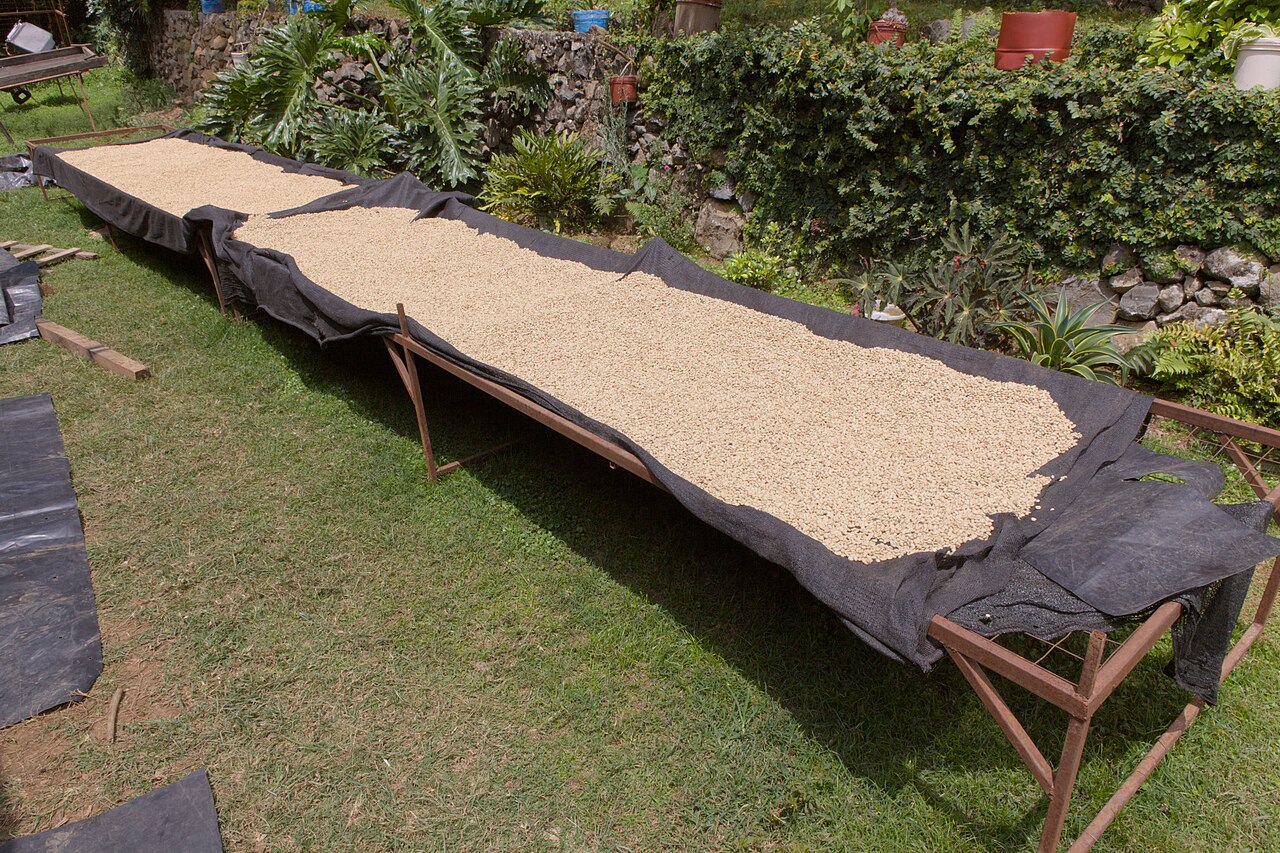
Wikipedia calls the dry, natural or unwashed method the oldest way to process coffee. The whole fruit is cleaned after harvest and then dried in the sun, either on trestle tables or beds, or spread on a patio and turned by hand or with rakes.
It is the cheapest and most energy-efficient method, but the weather matters. Rain and excessively strong sun can spoil the crop. Depending on the weather, it takes about four weeks to reach the maximum moisture content of 12.5 per cent. The method relies on dry harvest weather, so it is impractical where the air stays humid or rain falls often during picking.
Wikipedia lists where it is used. About 90 per cent of Brazilian arabica is handled this way, as is most coffee from Ethiopia, Haiti and Paraguay and part of India’s and Ecuador’s arabica. Nearly all robusta is dry-processed.
Honey coffee keeps some of the sticky mucilage, and the colour names the amount
Wikipedia puts honey coffee in a group it calls semi-dry processing. In pulped natural, or honey, processing the skin is removed but the mucilage is left on the parchment. The beans are fermented and dried with the mucilage, and the washing step is omitted. It uses considerably less water than the wet method.
The colour names how much mucilage stays on.
- Yellow: part of the mucilage is mechanically removed. Drying takes about 8 to 10 days.
- Red: roughly half to three quarters is kept. Drying takes 12 to 15 days.
- Black: dried with all of the mucilage, which takes around 30 days with frequent turning. Wikipedia describes it as the most demanding.
Wikipedia says the method was first tried at the Instituto Agronômico de Campinas in Brazil in the early 1950s and became commercial in southern Minas Gerais in the 1980s, where the Brazilian product is called “cereja descascado”. The cup is typically described as mellow and sweet, with mild acidity and fruit or honey notes.

Indonesia’s wet-hulled method
The second semi-dry method is wet-hulled, called giling basah, or “wet grinding”. Wikipedia says smallholders in Sumatra, Sulawesi, Flores and Papua use it. The parchment is removed while the bean is still wet, as a response to harvesting in the rainy season. The cup is characterized by low acidity, heavy body, and spicy, earthy and fruity notes. Because the beans are handled wet for longer, there is a risk of mould.
How to use this when you buy coffee
A bag that names its process gives you one more clue. The notes below only restate what Wikipedia says about each cup, and Wikipedia hedges them with words such as “typically described” and “said to”, so treat them as tendencies and not promises.
- Honey: typically described as mellow and sweet, with mild acidity and fruit or honey notes.
- Wet-hulled: characterized by low acidity, heavy body, and spicy, earthy and fruity notes.
- Washed with underwater fermentation: said to emphasize acidity and aroma and to suppress some astringency.
Wikipedia gives no cup descriptors for natural coffee in the sections we read, so we do not offer any. For help with the rest of the choice, see How to Choose Coffee Beans: A Simple 4-Step Guide. For what acidity means in the cup, see Coffee Acidity Explained: Bright vs Sour.
Questions people ask
What does washed coffee mean?
It means the fruit covering is removed before the beans are dried. This is the wet process. Wikipedia quotes the International Trade Centre saying it is the most common of the three traditional methods and often produces the highest quality, though it needs considerable skill and a great deal of water.
Is natural coffee the same as unwashed?
Yes. Wikipedia lists the dry process as natural, dry or unwashed. The whole fruit is dried, usually in the sun, and the method is the oldest of the traditional ones.
What is honey process coffee, and is there honey in it?
Honey coffee is Wikipedia’s pulped natural method: the skin is removed and the sticky mucilage is left on the parchment while the beans dry. The name refers to the mucilage kept on the bean, not added honey. That is our plain reading of Wikipedia’s description, not a sentence Wikipedia states in those words. Yellow, red and black describe how much mucilage stays.
Why do some regions use natural processing?
Wikipedia says the method suits dry harvest weather and is the cheapest and most energy-efficient. It is impractical where the air stays humid or rain falls often during picking.
What is wet-hulled coffee?
It is the Indonesian method called giling basah, or wet grinding, used by smallholders in Sumatra, Sulawesi, Flores and Papua. The parchment is removed while the bean is still wet, in response to rainy-season harvests. Wikipedia says the cup is characterized by low acidity, heavy body, and spicy, earthy and fruity notes.
Sources and scope
- Wikipedia: Coffee production (sections on the wet process, dry process, semi-dry process and milling; “Coffee processing” redirects to this article)
The article was read on 20 October 2026 (Melbourne). We used no other source.
Photo credits:
- Cover: Harald Ulver, CC BY-SA 4.0, via Wikimedia Commons. Coffee beans spread out to dry on raised frames; the Commons page places it on a coffee farm in Tanzania.
- Coffee cherries on a bush: Daniel Case, CC BY-SA 4.0, via Wikimedia Commons.
- Coffee pulping machine: Harald Ulver, CC BY-SA 4.0, via Wikimedia Commons.
- Diagrams: drawn by MELB NOTE from the source above.
Scope: This guide explains the processing methods as Wikipedia describes them. The cup descriptors are Wikipedia’s, and we do not say that any particular bean will taste a certain way. It gives no prices, no brands and no health claims.


