Coffee Guide
By MELB_NOTE
The short answer
Body and mouthfeel describe how a coffee feels in the mouth: heavy or light, smooth or rough, oily or dry. They are separate from taste. In a lab test on iced coffee, thickness mattered more for creaminess than slipperiness did. In brewing, the filter matters a great deal, because coffee oils pass through a metal filter or no filter far more easily than through paper.
This guide continues our series on coffee acidity in depth, coffee sweetness in depth and coffee bitterness in depth. Those cover what the tongue tastes. This one covers what the mouth feels.
30-second summary
- The SCA Coffee Value Assessment rates mouthfeel on its own scale, with descriptors such as oily, smooth, rough, metallic and mouth-drying.
- In one study, an iced coffee about 2.5 times thicker was rated creamier, thicker and more slippery. A thin one made more slippery was not rated creamier.
- In one study of brews, boiled coffee carried about 7 mg of the oil cafestol per cup, espresso about 1 mg, and drip-filtered coffee a negligible amount.
- A metal filter or an immersion brewer lets more oil and fine particles through than a paper filter does.
Body and mouthfeel describe texture, not taste

Tasting sheets treat mouthfeel as its own category. The SCA Coffee Value Assessment descriptive form asks tasters to rate mouthfeel intensity and to tick descriptors. The listed descriptors are metallic, rough (gritty, chalky, sandy), oily, smooth (velvety, silky, syrupy) and mouth-drying (SCA CVA forms, May 2025).
Many coffee writers use “body” for the weight of the cup and “mouthfeel” for the wider texture, including oiliness and dryness. There is no single strict definition, so this guide names the specific property each time.
A thick cup and a slippery cup are not the same thing

Blok, Bolhuis and Stieger (2020) tested three iced coffees on 47 untrained panellists. Two were thin, at about 4 mPa s. One of those had its friction lowered by up to 25% with polyethylene glycol, so it felt more lubricating. The third was thick, at about 10 mPa s, which is 2.5 times higher. It was made with maltodextrin and also had low friction.
The thick sample was rated creamier, thicker and more slippery than both thin ones. The thin, slippery sample was rated less creamy and less thick than the thin, grippy one, although it felt more slippery by touch. The authors found that creaminess was more strongly linked to thickness than to slipperiness. Their conclusion was that more viscosity increases creaminess, while more lubrication alone is not enough.
This was a lab model of iced coffee with added ingredients, not a test of hot brewed coffee. It still shows that a cup can feel smooth without feeling full.
The filter decides how much coffee oil reaches the cup

Roasted coffee contains oily compounds. The best studied are the diterpenes cafestol and kahweol. Gross et al. (1997) measured them in different brews. Scandinavian-style boiled coffee and Turkish coffee had the most cafestol, at 7.2 and 5.3 mg per cup. Espresso had about 1 mg per cup. Drip-filtered and instant coffee had negligible amounts.

These figures are a useful guide to how much oil each method lets through. They are not a direct measure of mouthfeel. Later studies report different espresso and filter values, which probably reflects different coffees, roasts and brewing conditions, so treat the numbers as indicative.
The same compounds have a health side. In a small trial, Urgert et al. (1997) gave 10 healthy men about 60 mg of cafestol a day for 28 days, and LDL cholesterol rose by about 0.57 mmol/L. That dose is about eight times the 7.2 mg of cafestol in a cup of boiled coffee. If cholesterol is a concern for you, ask your doctor about unfiltered coffee. It is not a brewing tip.
Small changes in brewing change how the cup feels
The advice below is our inference from the studies above, not a tested recipe.

- For a fuller cup, try a metal filter or an immersion brewer such as a French press. Both let more oil and fine particles through.
- For a cleaner, lighter feel, use a paper filter. Our guide to pour-over vs drip coffee compares the two.
- Grind size changes extraction and the amount of fine particles. See the grind size guide.
- Adding milk changes the texture of the drink, as in a flat white.
- Change one thing at a time, so you can tell which change you are tasting.
Questions people ask
Is body the same as strength?
No. Strength is how much coffee is dissolved in the water. Body is how the cup feels. They often move together, but they are different things.
Is creamy the same as thick?
Not quite. In the iced coffee study, creaminess was linked more to thickness than to slipperiness, but this comes from one small study of 47 people.
Does French press have more body than pour-over?
Usually, because it lets more oil and fine particles into the cup. The studies here measure the oil, not the body, so this is an expectation, not a measured result.
Is French press coffee unhealthy?
The studies above show more cafestol in unfiltered coffee, and cafestol raised LDL cholesterol at high doses. Ask your doctor what that means for you.
Sources and scope
- Specialty Coffee Association, Coffee Value Assessment forms (May 2025)
- Blok AE, Bolhuis DP, Stieger M (2020), Contributions of viscosity and friction properties to oral and haptic texture perception of iced coffees, Food & Function 11:6446-6457
- Gross G et al. (1997), Analysis of the content of the diterpenes cafestol and kahweol in coffee brews, Food and Chemical Toxicology 35(6):547-554
- Urgert R, Essed N, van der Weg G, Kosmeijer-Schuil TG, Katan MB (1997), Separate effects of the coffee diterpenes cafestol and kahweol on serum lipids and liver aminotransferases, American Journal of Clinical Nutrition 65:519-524
Photo credits:
- Diagrams: drawn by MELB NOTE from the sources above.
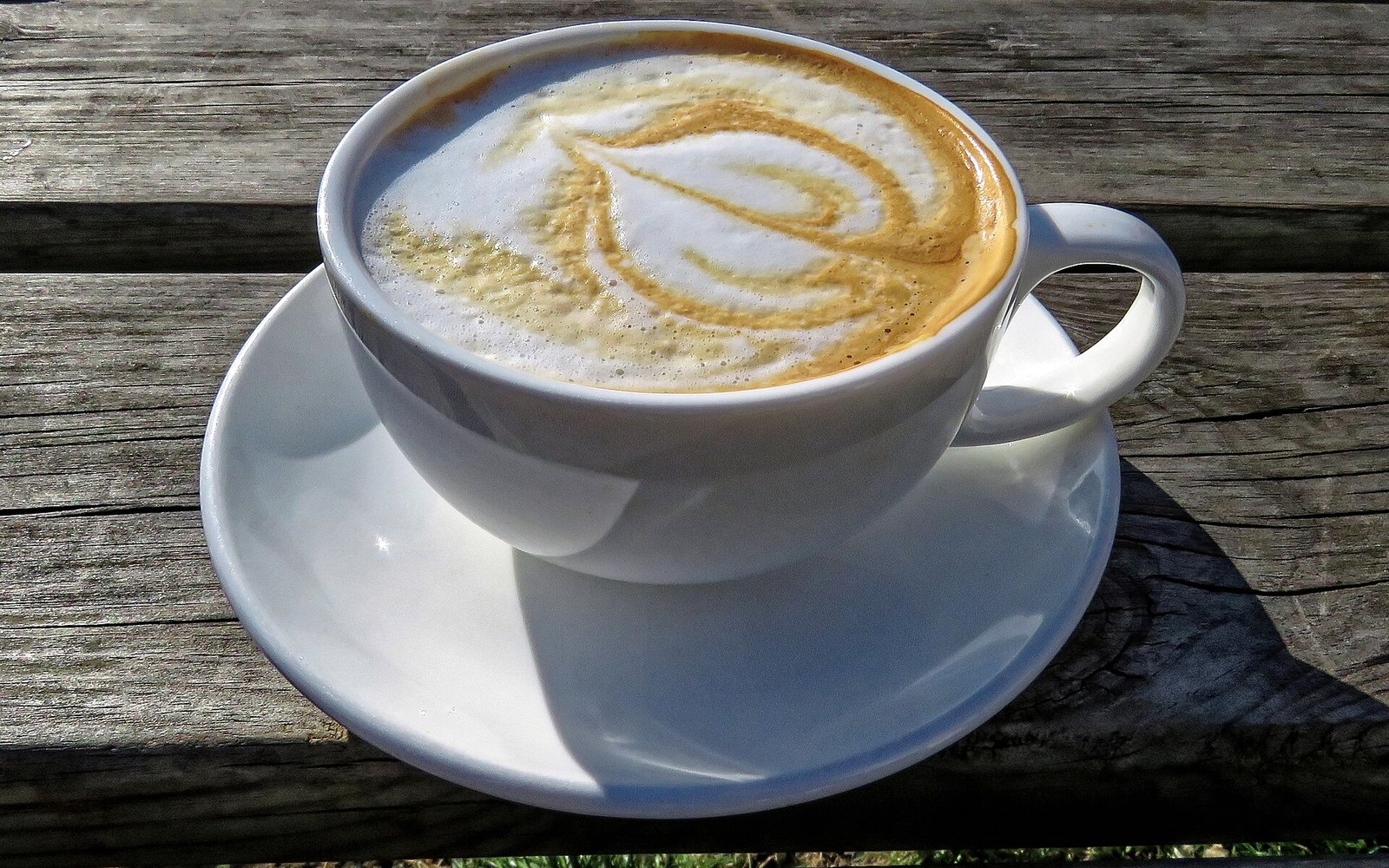
- Cover: Acabashi, CC BY-SA 4.0, via Wikimedia Commons (cropped).
- French press: Infrogmation, CC BY-SA 2.0, via Wikimedia Commons (cropped).
Scope: The texture study used iced coffee with added thickeners, and the diterpene figures come from 1990s measurements of specific brews. This guide makes no claim about how roast level or grind size changes body, because the studies above do not cover it. Sources checked 8 October 2026.


