Melbourne Notes
By MELB_NOTE
The short answer
The Victorian Department of Health says its epidemic thunderstorm asthma risk forecast runs from 1 October to 31 December each year and covers three days: today, tomorrow and the day after. It uses three levels. Green means low, orange means moderate and red means high. The department says the forecast is not a formal warning. It is published on VicEmergency and the VicEmergency app, and today’s forecast is updated once, at about 12:30pm.
This guide explains what the daily thunderstorm asthma risk forecast shows and where to find it. It is general information only, not medical advice. We read two official pages on 28 October 2026 (Melbourne time) and used no other source: the Victorian Department of Health page Epidemic thunderstorm asthma risk forecast and the Premier of Victoria media release Protecting Victorians From Thunderstorm Asthma (3 October 2025). Everything about health below is what those pages say.
30-second summary
- The forecast runs from 1 October to 31 December and covers today, tomorrow and the day after.
- Green is low, orange is moderate and red is high, according to the Department of Health.
- It combines weather and pollen data, and today’s forecast is updated once, at about 12:30pm.
- Find it on VicEmergency (emergency.vic.gov.au) and the VicEmergency app.
- It is not a formal warning. Check the official page for today’s level.
Thunderstorm asthma season in Victoria runs from October to December
The Premier of Victoria’s media release from 3 October 2025 says thunderstorm asthma typically occurs between October and December. It says certain thunderstorms cause grass pollen grains to burst into particles that can be inhaled deep into the lungs and trigger asthma symptoms.
The Department of Health says its forecast runs from 1 October to 31 December each year. The department says grass pollen levels usually peak from mid-October and fluctuate daily until late December. It adds that grasses start dying off by late November, so levels then decline.
The photo shows grasses in flower in England, not Victoria. It is only an illustration of what flowering grass looks like.

The forecast uses three levels: green, orange and red
The Department of Health describes the levels this way:
- Green (low): the conditions needed for an event are not expected, so an event is unlikely.
- Orange (moderate): one required element may be present, either a high pollen forecast or a severe thunderstorm with strong winds. The department describes this as a moderate chance of an event.
- Red (high): a high pollen forecast and severe thunderstorms with strong winds are both likely, which raises the risk of an event.
The department says the forecast is not a formal warning. A higher level does not mean an event is certain, and a lower level does not rule one out. It also says the forecast does not predict the usual seasonal rise in asthma and hay fever symptoms.

Forecasts come from weather and pollen data, updated at about 12:30pm
According to the Department of Health, the forecast combines weather and pollen data. The weather information comes from Bureau of Meteorology numerical models and forecasters. The pollen forecasts consider wind, temperature, rainfall, humidity and satellite-estimated grass coverage and condition. Automated pollen counters help verify and refine them.
The forecast covers three days: today, tomorrow and the day after. The department says Victoria is divided into nine forecast districts, and its page lists the council areas in each. The current day’s forecast is updated once, at about 12:30pm.
The department also says the science is new and accuracy is still being assessed because events are rare.

You can find the forecast on VicEmergency and set up a watch zone
The Department of Health says the forecast is published on VicEmergency (emergency.vic.gov.au) and the VicEmergency app. For pollen data, it points to the Melbourne Pollen app and the Melbourne Pollen website.
The department’s page describes how to set up a watch zone:
- Choose “Create a Watch Zone”.
- Enter an address or suburb.
- Adjust the radius.
- Give the watch zone a name.
- Make sure the advice or warning option is selected.
The department lists automated pollen counters at Parkville, Geelong, Hamilton, Ballarat, Bendigo, Wodonga and Churchill. Parkville is the one in Melbourne.

The 2016 Melbourne event came a year before the forecast launched in 2017
The Premier’s media release says that on 21 November 2016 Melbourne experienced what it calls the world’s largest epidemic thunderstorm asthma event. It says the event caused 10 deaths and left thousands of people with breathing difficulties in a very short time.
The release says Victoria’s thunderstorm asthma forecast system launched in 2017, the year after. It also says that in 2025 six new automated pollen counters replaced manual traps. That release was published last season, on 3 October 2025, so check the Department of Health page for the current setup.
The release repeats the advice on the department’s page: close windows, avoid outdoor exposure in gusts and check the VicEmergency app.
Who is at risk and what the Department of Health says to do on higher-risk days
The Department of Health says people at risk include those with current, past or undiagnosed asthma, or springtime hay fever. It says having both, or poorly controlled asthma, raises the risk further.
For higher-risk days, the department says to:
- avoid exposure to storms, especially the gusts that come before them;
- go indoors, close windows and doors, and turn off air conditioners that draw in outside air;
- keep a reliever available, as discussed with a doctor or pharmacist;
- review your asthma action plan if you have one, and know the four steps of asthma first aid.
The department says forecasts support prevention and good management but do not replace them. This page is general information only. Follow the official page, and ask a doctor or pharmacist about asthma or hay fever.
Questions people ask
When is thunderstorm asthma season in Melbourne?
The Department of Health says the forecast runs from 1 October to 31 December each year, with grass pollen levels usually peaking from mid-October. The Premier’s release says thunderstorm asthma typically occurs between October and December.
What do the forecast colours mean?
Green is low, orange is moderate and red is high. Orange means one required element may be present, a high pollen forecast or a severe thunderstorm with strong winds. Red means both are likely.
Where do I find the forecast?
On VicEmergency (emergency.vic.gov.au) and the VicEmergency app. The Department of Health also points to the Melbourne Pollen app and website for pollen data.
What time is the forecast updated?
The department says the current day’s forecast is updated once, at about 12:30pm.
Is the forecast a warning?
No. The department says it is not a formal warning. A higher level does not mean an event is certain, and a lower level does not rule one out.
Sources and scope
- Victorian Department of Health: Epidemic thunderstorm asthma risk forecast (page last updated 16 June 2026)
- Premier of Victoria media release: Protecting Victorians From Thunderstorm Asthma (3 October 2025)
We read the text of these two pages on 28 October 2026 (Melbourne time) and used no other source.
Photo credits:
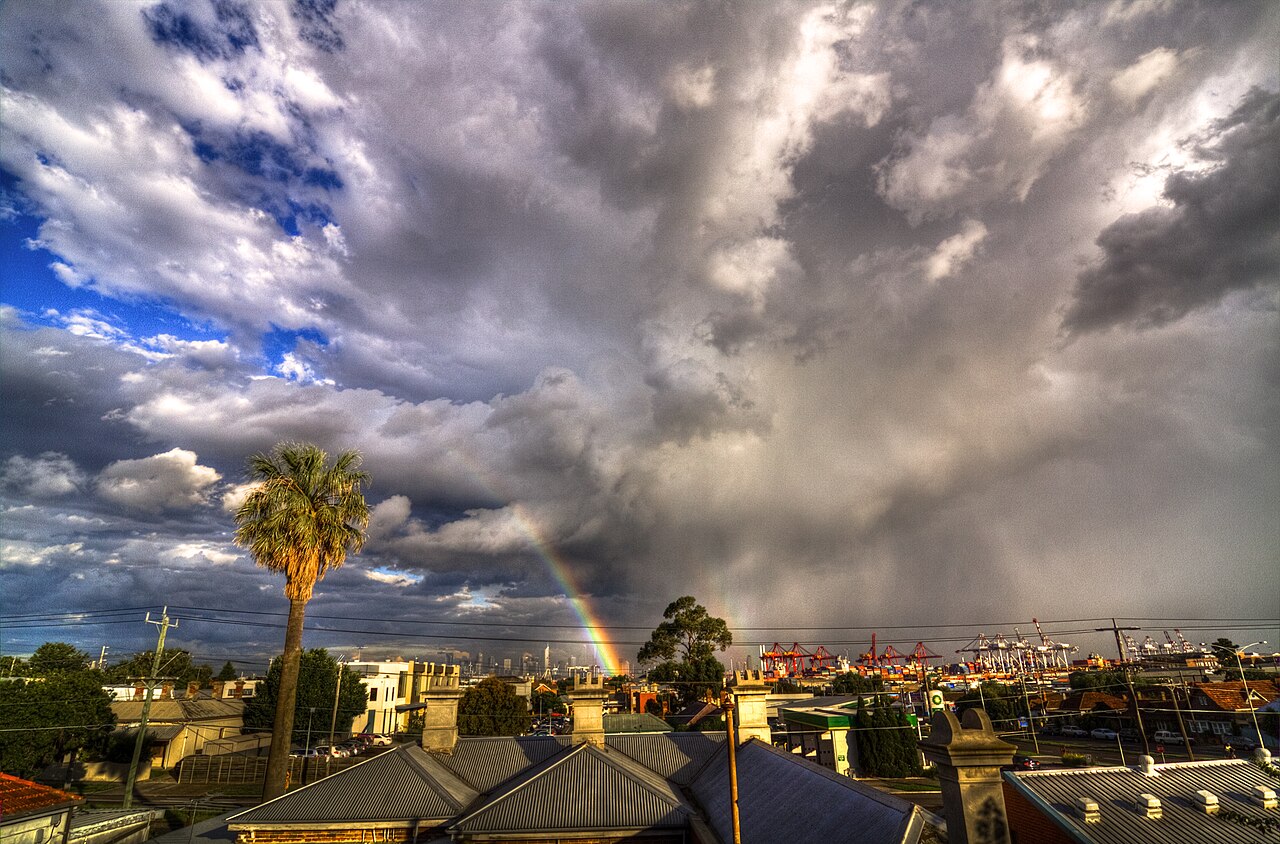
- Cover: Travellers travel photobook from Melbourne, Australia, CC BY 2.0, via Wikimedia Commons. Storm clouds with a rainbow over rooftops, with the Melbourne skyline in the distance. Not a photo of an asthma event.
- Grasses in flower: Robin Stott, CC BY-SA 2.0, via Wikimedia Commons. Warwick, England, 30 May 2025 per the Commons page.
- Melbourne in rain at night: Shane Sleeman, CC BY 4.0, via Wikimedia Commons. Dated 5 October 2025 on the Commons page.
- Diagrams: drawn by MELB NOTE from the sources above.
Scope: This is what the two pages state on 28 October 2026. It is general information, not medical advice. Check the Department of Health page and VicEmergency for today’s level, and ask a doctor or pharmacist about asthma or hay fever.
Related guides
- Melbourne Weather by Month: Temperatures, Rain and the Four Seasons Reputation
- Melbourne Cup Carnival 2026: Dates for Derby Day, Cup Day, Oaks Day and Stakes Day
- What’s On in Melbourne Right Now: Spring 2026 Dates and Coffee Stops
- Can You See the Aurora Australis from Melbourne? Kp Levels, Where to Look and How to Get Alerts


